
Roulette Not on GamStop Complaints and Disputes
 Available in US
Roulette not on GamStop means roulette supplied by an operator outside Great Britain’s licensing system, so the site sits outside the national self-exclusion scheme and outside the protections attached to a Gambling Commission licence. Play is not itself the offence — offering the facilities is. Disputes go not to the Commission but to whatever alternative dispute resolution provider the offshore licence names.
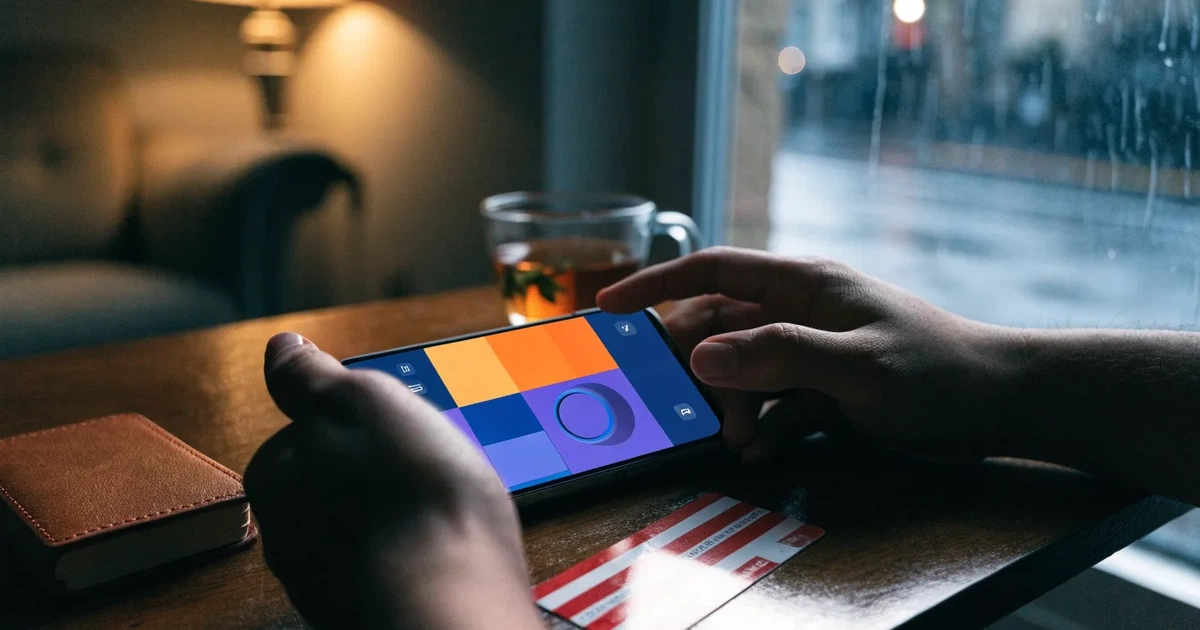
Where a complaint can go is the part of this market nobody advertises. The banner promises faster roulette, bigger tables, no checks. What it does not say is that the arbitration clause at the bottom of the page leads somewhere with a different address, a different timetable and a different idea of what fairness means. I have read a good many of those terms across ten years of writing about this trade, and the tell is always the same: the promise is loud and the remedy is buried.
The scale is not trivial. The Commission’s Illegal Markets team issued 3,140 cease and desist and disruption notices between April 2024 and October 2025, referred 447,778 Bing and Google URLs and secured 287,961 removals. Its own analysis, published 5 November 2026 on data covering April 2025 to April 2026, found 2.5 per cent of people who had gambled online in the past four weeks had engaged with illegal gambling websites. Three years ago I would have called that a rounding error. I would not now.
So this is a page about the paperwork rather than the pitch. What the scheme does and does not reach, what a licence from Curaçao or Anjouan or Kahnawake actually obliges, which payment clocks are honest, how identity checks move the first time and the fifth, and — the question this site keeps returning to — who decides when an operator and a player disagree.
What GamStop Reaches, and What It Does Not
GamStop Online is the national online self-exclusion scheme, run by The National Online Self Exclusion Scheme Limited (company number 10504973) and free to use. Registering blocks a person from gambling with all online companies licensed in Great Britain for six months, one year, five years or five years with auto-renewal. Signing up takes minutes; the block can take up to 24 hours to bite. It is often typed “gamestop”, which is a slip about the word and not about the scheme.
The obligation on operators is neat. Since 31 March 2020 licence condition Social Responsibility Code provision 3.5.5 has required every online licensee to participate in the national multi-operator scheme, and since April 2020 they must also check their entire customer base against it at least every 24 hours. Two operators had their licences suspended on 3 April 2020 for missing the integration deadline. That is what enforcement looks like when the rule is crisp.
Offshore roulette is outside all of it. A site holding no Gambling Commission licence is not connected to GamStop, and the Gambling Commission’s remit only allows it to regulate websites that trade or advertise to customers in Great Britain — which is precisely why the scheme’s obligations never attach to a Curaçao or Anjouan operator. Trade sources state this plainly, though it sits outside the regulator’s own pages [unconfirmed from a primary regulator source].
And self-exclusion is not a thing to be worked around. It holds for its full term, and it stays in place after that term ends until the person contacts GamStop to remove it. GamStop Online registrations cannot be removed early; the group’s 2025 annual report devotes a whole section to refusing. If the chosen period lapses untouched, the data is held through a further automatic seven-year period during which operators are told the person was previously excluded. An offshore room is not a gap in that; it is a different legal universe, and using it does not shorten anything.
The numbers say the scheme is not a niche. GamStop recorded 117,756 new registrations during 2025 and held 561,983 active exclusions at the end of that year. By July 2026 it reported 614,738 people currently on the register, of whom more than one in two had taken the maximum five years. Registrations rose 16 per cent year on year in the first half of 2026, with May 2026 setting a monthly record of 12,236.
Who Licenses Roulette Outside Great Britain
Offshore is not one thing. It is a ladder, and where a site sits on it changes almost everything about what happens when money goes wrong.
Curaçao and the LOK
Curaçao rebuilt its regime. The National Ordinance on Games of Chance took effect on 24 December 2024, making the Curaçao Gaming Authority the direct licensing and supervisory authority and ending the old master-licence and sub-licence model. The legacy orange sub-licence certificates of operation ended on 15 October 2025, and a historic /JAZ number or old seal must not be treated as proof of a current licence. Licensing activity ceased for the four former master licensors between 18 August 2024 and 31 January 2025.
The money is instructive. A B2C application fee is a one-time, non-refundable EUR 4,592, plus EUR 150 per ultimate beneficial owner. The total annual B2C fee is EUR 47,450, split between a EUR 24,490 licence fee to the National Treasury and a EUR 22,960 supervisory fee to the regulator. For comparison, the Commission’s statutory levy takes 1.1 per cent of an online operator’s previous-year gross gambling yield. One model charges a fee regardless of how the business behaves; the other charges in proportion to the business it does and spends the proceeds — just under £120 million in the levy’s first year — on research, prevention and treatment.
Curaçao’s verification machinery is worth knowing. The authority issues two separate seals: a Certificate of Operation Seal, only to B2C operators and only for an approved, registered player-facing domain, and a License Certificate Seal that is not domain-specific. Clicking the Certificate of Operation Seal must redirect to cert.cga.cw, and if the seal differs in design, colour or format the site is not authorised. If the certificate behind the seal names a different domain from the one being viewed, the site is showing somebody else’s certificate. The regulator announced on 7 October 2026 that its previous portal would not return to service and that it is working on an alternative way to verify licensed domains — so the check is currently harder than it should be, which sites will exploit.
Anjouan
Anjouan is a constituent territory of the Union of the Comoros, with a framework built on legislation adopted in 2005. Its published fees are EUR 17,828 for B2C licence issuance, one-time, the same for annual renewal, with EUR 500 per additional domain or URL. Anjouan Gaming says licences carry no territorial restrictions under Anjouan law but that holders must comply with the laws of the jurisdictions where they operate.
The trade press has been less generous. An ABC News investigation published on 31 December 2025 reported that Anjouan Licensing Services claims to have issued more than 1,300 gambling licences at around EUR 17,000 each per year, and that Comoros financial intelligence officials described Anjouan Corporate Services as operating illegally; a former attorney-general of the Comoros called the licensing entity “an illegal entity”, and the investigation reported the offshore financial authority was stripped of recognised-regulator status by Comorian banking laws passed in 2013 and 2015. Anjouan Gaming answered on 10 June 2026 that an Anjouan licence “is not, and has never been presented as, a universal authorisation to operate in every country in the world” — a fair statement of the law generally, and a quiet admission that a licence is not permission.
Kahnawà:ke
The Kahnawà:ke Gaming Commission has regulated interactive gaming since its regulations were enacted on 8 July 1999 and describes itself as having done so longer than almost any other jurisdiction. Operators must be hosted at Mohawk Internet Technologies. The structure is unusual: the commission issues one Interactive Gaming Licence, held by a single entity, plus Client Provider Authorizations held by the operators themselves. A CPA application fee rises from USD 35,000 to USD 40,000 on 1 January 2027, with the annual CPA fee unchanged at USD 20,000. The commission’s Logo Certificate Program, effective 15 January 2010, generates a Certificate of Good Standing when a player clicks the logo.
Comparison of Licensing Regimes
The table below compares regimes, not brands. Every figure in it is drawn from the same sources as the text.
| Regime | Licence cost per year | Player-fund segregation required | ADR before a claim | Self-exclusion handling |
|---|---|---|---|---|
| Great Britain (Commission) | 1.1% of previous-year GGY via statutory levy | Yes — separate client account, insolvency rating disclosed | Yes — eight-week internal process, then an approved provider free of charge | GamStop Online, 6 months to 5 years, not removable early |
| Curaçao (CGA) | EUR 47,450 total B2C | Yes, under published standards | Not specified in the LOK framework | Operator’s own scheme; not connected to GamStop |
| Anjouan | EUR 17,828 renewal | Yes, under published standards | Yes — an approved provider, complaints resolved within 30 days first | Operator’s own scheme; not connected to GamStop |
| Kahnawà:ke | USD 20,000 annual CPA fee | Contractual terms required to be fair | Yes — a full-time Dispute Resolution Officer | Voluntary scheme described as permanent and irrevocable |
| Costa Rica | No licensing regime | No licensing obligation | None specified | None specified |
Costa Rica deserves its own line. It operates no comprehensive gambling licensing regime and no formal framework for issuing gambling licences; the “data processing licence” sometimes cited in the trade is not a licence in the strict legal sense. Its Legislative Assembly rejected Bill No. 25,057 in early 2026, which would have introduced mandatory licensing. Under Costa Rican law games of chance turning primarily on luck are generally prohibited, so services should not be marketed to Costa Rican residents at all — only land-based casinos integrated into qualifying hotels are authorised. When a roulette page lists a Costa Rican “licence”, read it as an absence.
What the Identity Check Changes on the First Deposit and Afterwards
The check is the hinge on which everything else turns, and it behaves differently in the two systems.

In Great Britain, Licence Condition 17 requires a licensee to obtain and verify identity information before a customer is permitted to gamble, and the LCCP requires licensees to tell customers before the first deposit what documents or information may be needed, in what circumstances and in what form. In practice the first check is often invisible: an operator matches the account against databases such as credit reference agencies and the electoral roll and asks for nothing. The rule of thumb in the anti-money-laundering guidance is that identification and verification are needed when a customer deposits to take part in remote gambling, or withdraws funds or winnings, amounting to €2,000 or more, applied to single transactions and to transactions that appear linked.
The second check is where the trouble starts, because it turns on money rather than on entry. Later, when a stake pattern crosses a threshold, a source-of-funds request arrives. Since 31 October 2025 operators must prompt a customer to set a financial limit before the first deposit, present that as the default option, and remind customers every six months to review their account information. Financial vulnerability checks became a licensing requirement in August 2024 at £500 net deposits in a rolling 30 days and moved to £150 on 28 February 2025. Financial Risk Assessments were announced on 7 July 2026, starting at £5,000 net deposits in 24 hours for customers aged 25 and over — a spend pattern fewer than 0.5 per cent of customers exceed. What matters for roulette is that the checks arrive after the winnings land rather than before the spin.
The warning signs on the first check are worth naming. LCCP condition 17.1.1 prohibits requiring additional information as a condition of withdrawal where the licensee could reasonably have asked earlier, and the Commission says over a quarter of complaints to its Contact Centre concern identity verification. When a business asks for documents only at the cashier, one of two things is happening: either its onboarding was sloppy, or the delay is doing work it was not meant to do.
Then the offshore version. Anjouan’s published standards require segregation of player funds, certified random number generators and AML and age verification, and Kahnawà:ke requires contractual terms free of unfair or unreasonable provisions. Neither is checked by anyone with jurisdiction over a British player. A Curaçao Certificate of Operation Seal is domain-specific, so a rogue operator can show a valid certificate belonging to a legitimate sister brand and the click-through will still resolve; that is why the certificate must name the domain on the screen. And when a site invokes a “responsible gaming” review to hold a withdrawal, note that the Commission has said friction belongs at the deposit, not the cashier — offshore, nobody has said anything of the sort.
Five Signs an Offshore Roulette Room Can Be Trusted
Trust here is not a feeling. It is a set of documents that survive being checked.
The licence is verifiable on the regulator’s own register
A licence number on a footer is decoration. A certificate that resolves to the authority’s own domain, names the exact domain you are viewing, and matches the operator’s registered entity is evidence. The Kahnawà:ke Logo Certificate Program generates a Certificate of Good Standing from the site itself, and a Curaçao Certificate of Operation Seal must redirect to cert.cga.cw and must not differ in design, colour or format. If the seal points elsewhere, or the certificate shows another operator’s domain, stop.
The complaints route leads to a named third party
Every legitimate framework names an adjudicator, and Anjouan requires licensees to appoint an approved alternative dispute resolution provider and publish its name and contact details in player-facing terms, with complaints resolved within 30 days before escalation. Kahnawà:ke employs a full-time Dispute Resolution Officer. Read the terms page and find the name. If the end of the road is an internal “complaints team” and no further address, the operator has designed the dead end deliberately.
The payout clock is published in numbers
A site that states a processing window in hours, names the method and says where the delay sits — operator or bank — is telling the truth about its own pipeline. A site that says “within 3–5 working days pending review” is telling you that a human decides whether to pay. Reverse withdrawals have been banned in Great Britain since 31 October 2021 under RTS 14B, which says consumers must not be given the option to cancel a withdrawal request, so an offshore room offering to put money back into the balance mid-withdrawal is advertising a facility a British operator is forbidden to provide.
Bonus terms are short enough to read
Under LCCP Social Responsibility Code 5.1.1, in force since 19 January 2026, wagering on bonus funds is capped at ten times and mixed-product promotions are banned — the Commission noted that some licensees had applied terms of up to 60 times. Offshore multipliers are commonly described in trade coverage as 25× to 40×, with no-deposit offers at 40× to 60× and a cashout cap around €50–€100 [unconfirmed]. A deposit bonus also usually caps the maximum bet while wagering at a small figure — one operator’s published terms set €5 for regular players and €10 for VIPs, with any bet above the limit rejected. If the terms run beyond a screen and a half, the terms are the product.
Player funds are segregated and the insolvency rating is stated
Great Britain requires customer funds to be held in a separate client account, requires the operator to choose one of three protection ratings — not protected, medium or high — and requires an operator rated “not protected” to remind customers every six months that their money is not protected in the event of insolvency. Keeping funds in a separate client account does not mean getting them back if the operator fails, and operators may hold customer money in overseas bank accounts. A segregated account with a named bank is a good sign. A segregated account with no bank named, or a rating invented on the spot, is not.
How to Judge a Roulette Room Before Depositing Anything
Six steps, in this order, and each one exists for a reason.
- Open the regulator’s register, not the site’s About page. Find the operator’s legal entity name in the terms, then search that name in the authority’s own list. The reason is banal: the register is the one page the marketing team cannot edit.
- Click the seal and read what loads. The certificate must be from the authority’s own domain and must name the site’s domain. A valid certificate belonging to a different brand is a documented fraud pattern under the Curaçao certification policy.
- Read the complaints clause in full and write down the adjudicator’s name. Then check whether that provider appears on the regulator’s approved list — Anjouan’s currently approved providers include EGIS ADR, Axion ADR, iGaming ADR and another approved provider. The reason: this is the only party who can rule against the operator and be expected to be obeyed.
- Find the withdrawal window and the processing order. Look for hours rather than “working days”, for a named method, and for whether a manual review is applied to every nth withdrawal. A British regulatory settlement in October 2026 included exactly that pattern — a term limiting customers to one withdrawal at a time, and manual review of every fifth or tenth withdrawal — among findings the Commission treated as unfair.
- Scan the bonus terms for three numbers: the multiplier, the maximum bet while wagering and the cashout cap. If any of the three is absent, treat the offer as having no ceiling and no floor, which in practice means the house decides later.
- Set a financial limit in the account before the first deposit, and check what the site does with it. British licensees have had to prompt that since 31 October 2025 and must present the limit as the default rather than an opt-in. Offshore, a limit you set yourself is still the cheapest control available, and if the site makes it awkward or invisible, you have learned something useful about how it will behave when the number is large and the withdrawal is not.
Who Decides When Roulette Money Goes Missing
Where a complaint can go is the site angle here, so it is worth being exact.
If the operator holds a Gambling Commission licence, the route is fixed. Under Social Responsibility Code provision 6.1.1 a licensee must have arrangements for a customer to refer a dispute to an alternative dispute resolution entity free of charge if it is not resolved within eight weeks, and the customer must have gone through the operator’s own procedure first — the operator may issue a deadlock letter. The Commission’s approved providers include IBAS, eCOGRA, CEDR, ADR Group, Pegasus, Blexr, ProMediate and Tattersalls Committee. The evidence that this machinery has teeth: in eCOGRA’s report for 1 October 2024 to 30 September 2025, 150 valid disputes were categorised as Deposits and Withdrawals, the average domestic resolution time was 31 days, and 17.8 per cent of completed disputes were decided for the consumer. IBAS, over the same period, recorded 217 banking and financial disputes among 3,721 domestic cases, completed domestic cases in an average of 20 days, and reports 100 per cent operator compliance with decisions in the consumer’s favour. The Commission itself is a regulator, not an ombudsman: it cannot resolve an individual complaint or get anyone’s money back.
Offshore, that whole scaffold is gone. There is no UK-approved provider to escalate to, no 100 per cent compliance record to lean on, and no licence condition about unfair terms to argue from — the LCCP’s prohibition on terms giving an operator sole discretion to void winnings simply does not reach a Curaçao entity. What remains is the operator’s nominated provider under its own licence, and the courts of the jurisdiction named in the terms. The Commission’s own analysis found registrar blocks and website suspensions cut engagement by an average of 91 per cent, GEO IP blocking 60 per cent, Google removal 30 per cent and Facebook removal 8 per cent — which tells you how the regulator fights, and also that a site can be perfectly reachable while its licence is under question.
There is a specific pattern worth knowing. The Commission’s industry warning notice of 20 January 2025 described licensed casino games appearing on unlicensed websites available to British consumers, and noted that such sites often target customers who have self-excluded through GamStop and may have inadequate social responsibility and anti-money-laundering controls. That is the market diagram: the audience is chosen precisely because it is unprotected.
If Roulette Stops Being a Game
Help exists and it is free, whoever supplied the roulette. The National Gambling Helpline, run by GamCare, is on 0808 8020 133, 24 hours a day, every day of the year, and the same number reaches live chat and WhatsApp. Callers in Wales have a dedicated line, 0808 2819 265. GamCare’s services cover England and Scotland around the clock, though the helpline is not a crisis line. BeGambleAware, the public face of the charity GambleAware, directs people to the same number.
Beyond the phone line there is NHS treatment — the NHS National Gambling Clinic in London takes self-referrals, and NHS England had opened 15 specialist clinics since 2019 with regional services receiving almost 5,000 referrals a year as of February 2026. GamFam (charity number 1191139) supports families through its five-stage GRA5P programme. Gamblers Anonymous England, Wales and Ulster answers on 0330 094 0322 with around 250 meeting locations and no appointment needed, and Gam-Anon UK and Ireland supports the family whether or not the gambler attends. Citizens Advice offers free, confidential help with the debt that tends to follow, and Citizens Advice Scotland runs a gambling support advice line on 0800 328 1131, Monday to Friday 10am to 3pm. Blocking software is a reasonable extra layer too: BetBlocker states it blocks over 1,368,000 gambling websites and 3,100 apps, needs no registration and is free worldwide, while Gamban blocks licensed and unlicensed sites and costs £4.99 a month or £29.99 a year in England and Scotland after its free UK scheme ended on 31 March 2026. Bank gambling blocks, available from the eleven banks on the Commission’s October 2026 list, decline payments to gambling merchant codes, though they must be switched on card by card.
None of that is a way round a self-exclusion, and it is not meant to be. A GamStop exclusion runs its full term and then remains until the person asks GamStop to remove it.
Questions About Roulette Not on GamStop
Is online roulette not on GamStop legal to play?
Playing is not the offence; providing the facilities is. Section 33 of the Gambling Act 2005 makes it an offence for a person to provide facilities for gambling without an operating licence, carrying on summary conviction up to 51 weeks’ imprisonment, a fine at level 5, or both. The Commission states plainly that offering commercial gambling services to British consumers without a Commission licence is illegal, including where the operator holds a licence elsewhere.
Do roulette sites not on GamStop really ignore my self-exclusion?
Yes, and not by accident. The scheme’s obligations apply only to Commission licensees, so an operator with no British licence is not connected to it and cannot be made to check. GamStop states its registration details are checked by operators when anyone tries to use an online gambling account — the check happens on the licensed side. An offshore account is not a way round an exclusion; it is a way of being unrecorded while it runs.
Where Roulette Betting Not on GamStop Disputes Are Resolved
At whichever adjudicator the offshore licence names. Anjouan requires licensees to appoint an approved provider and publish its details, with 30 days to resolve internally before escalation; Kahnawà:ke employs a full-time Dispute Resolution Officer. British licence holders instead use a Commission-approved provider free of charge after an eight-week internal process, with decisions complied with in 100 per cent of consumer-favourable IBAS cases reported for 2024–25.
Is live roulette not on GamStop different from software roulette?
The game does not change the paperwork, and the studio usually makes the licence question harder rather than easier. A live dealer studio is a separate corporate entity, sometimes licensed in a different jurisdiction from the site displaying the table, and the operator’s terms will name whose rules govern a disputed hand. The sensible check is the same as for any table: which entity holds the licence, and does the certificate name the domain on screen?
What happens to my money if an offshore roulette operator fails?
That depends entirely on the protection rating and the bank. British licensees must hold customer funds in a separate client account, disclose one of three insolvency ratings and remind customers every six months if the rating is “not protected”. Keeping money in a client account still does not guarantee its return on insolvency, and operators may hold customer funds in overseas accounts. Offshore, the rating is whatever the terms say and nobody audits the claim.
Can an offshore site hold my withdrawal for a “responsible gambling” review?
It can, because no rule stops it. The Commission has said it is not acceptable to introduce friction when a customer withdraws rather than when they deposit, and does not consider it fair to delay withdrawals purely for customer-interaction purposes — but that is a licence condition binding on British operators. Reverse withdrawals have been banned in Great Britain since 31 October 2021, and outside it the function survives under other names, including a “review” that puts the money back in play.
The Short Version, and a Number Worth Keeping
Roulette not on GamStop is not a better game or a hidden one; it is the same wheel under a licence that answers to a different authority, and the whole difference between one offshore room and another is who adjudicates when the wheel and the wallet disagree. Check the register, click the seal, find the adjudicator’s name.
If that is all too abstract, hold on to one figure: the Commission’s Illegal Markets team has issued 3,140 cease and desist and disruption notices since April 2024, and its own analysis reports that registrar blocks and website suspensions cut engagement by an average of 91 per cent where they land — a reminder that these rooms do not disappear quietly, they simply move to a new domain, and the helpline on 0808 8020 133 does not.
Games and Slots
Content created by the «Wagerbaseuk.com» team