Free Spins Not on GamStop: The Bonus Where Nobody Rules on the Small Print
 Available in US
Free spins not on GamStop belong to casinos outside the British licensing system: no UK Gambling Commission licence, no GamStop coverage, no UK consumer protections. A British-licensed bonus is capped at ten times wagering; offshore terms commonly run at 25× to 40×, with maximum cashout clauses and no regulator standing over the operator when a dispute goes wrong.

The phrase sells a small pleasure: a handful of spins, no deposit, nothing much at stake. The paperwork behind it is a different size entirely. In Great Britain an operator that wants to give away spins must first hold a licence from the Gambling Commission, must have already verified who is playing, and must keep its wagering demand at or below ten times the bonus. Take the licence away and all three obligations leave with it. What remains is a contract between a player and a company registered somewhere else — and, crucially for anyone who cares about how a disagreement ends, nobody with a duty to adjudicate it. That last point is the one this page keeps returning to. Most guides on this subject count the spins. I would rather count the routes a complaint can take, because that is what separates a bonus from a liability.
So we take the offers apart properly: the identity check that decides whether a free spin ever becomes money, the five signs that tell a trustworthy bonus from a trapping one, the checkable steps that make a claim worthwhile, and where a British player’s complaint can actually go when a casino and its player disagree about the small print. Along the way, the numbers — GamStop’s registrations, the enforcement totals, the dispute outcomes measured by the adjudicators themselves — get more space than the marketing does.
What “Not on GamStop” Actually Means for Free Spins
Start with the scheme itself, because the name is routinely mistyped. GamStop (often typed “gamestop”) is the national online self-exclusion register, run by The National Online Self Exclusion Scheme Limited and free to users. Registration takes a few minutes and can take up to 24 hours to bite. It blocks a person from every online gambling company licensed in Great Britain.
Since 31 March 2020, being part of the scheme has been a condition of a Gambling Commission licence, sitting in the Licence Conditions and Codes of Practice at social responsibility code provision 3.5.5. That is why offshore sites are outside it: their obligations run to another regulator, or to none. GamStop Online itself says it can only exclude a person from participating operators.
The numbers show how many people use it. GamStop recorded 117,756 new registrations during 2025 and had 561,983 active exclusions at the end of that year; by July 2026 it reported 614,738 consumers on the register, of whom more than one in two had taken the maximum five years. Registrations rose 16 per cent year on year in the first half of 2026, with May 2026 setting a monthly record of 12,236 sign-ups. Under-25s accounted for nearly one in three of those 2026 exclusions.
One point of principle, stated as a fact rather than a caution: a self-exclusion holds for its full term, and after the term ends it stays in place until the person contacts GamStop to remove it. Registration cannot be cancelled or deactivated during the exclusion period, and GamStop Online registrations are not removed early. Nothing here describes a way around that. Under the terms of use, even the auto-renewal option on a five-year exclusion can only be switched off during the last six months of that term; if a person does not deactivate, GamStop holds the data through a further automatic seven-year period.
A Checkable Number for Bonus Terms
The benchmark that matters to this page comes from the Gambling Commission, and it is a hard ceiling rather than a recommendation. On 19 January 2026 the Commission’s rules on rewards and bonuses came into force. Social responsibility code provision 5.1.1 states that licensees must not “apply wagering requirements, which requires a customer to play through bonus funds, over a maximum of 10 times”. The same provision bans incentives that mix more than one type of gambling product — betting, casino, bingo or lottery — within a single offer.

The Commission’s reason for choosing a cap instead of an outright ban is worth quoting, because it tells you what the offshore market looks like from the regulator’s side of the desk. It judged that a ban would push licensees into drafting terms that stopped customers cashing out bonuses at all, and said the ten-times limit “will take out extreme levels as some licensees currently apply up to 60 times wagering requirements”.
Ten times. That is the British standard. Hold it next to an offshore welcome bonus at 35× to 50×, or a no-deposit offer at 40× to 60× with a cashout ceiling of €50 to €100, and the arithmetic does the arguing. The British offer is smaller and duller precisely because someone with statutory powers said what it may contain. The offshore offer is bigger because nobody did.
How an Offshore Bonus Compares with the British Standard
The table below compares bonus arrangements by type, not by casino, using terms published by offshore operators in 2026 and the British rules that apply to licensed ones. The ten-times figure appears in the text above and in the third row here; they are the same number.
| Bonus type | Typical wagering demand | Cashout limit | Identity check timing | Who rules on a dispute |
|---|---|---|---|---|
| British-licensed deposit bonus | 10× maximum (LCCP 5.1.1) | No cap on withdrawing the deposit balance | Before deposit or first stake | An approved ADR body, free of charge |
| Offshore deposit bonus | 25× to 40× per trade coverage | Sometimes 300% of the bonus credited | Often at withdrawal, not at sign-up | The operator, then possibly a foreign ADR |
| Offshore no-deposit spins | 40× to 60× | €50 to €100 in the 2026 guide tables | Frequently at the point of cashing out | Often no ADR route at all |
| Offshore free chip with deposit made mid-bonus | The no-deposit terms survive the deposit | The original cap still applies | As above | As above |
Read the third column carefully. It is where the free spin stops being free. A wagering demand of 50× on a €100 cashout ceiling means a player who wins well is paid the ceiling, not the win — a clause that would be void on a British licence, where operators may not impose any maximum limit on the amount a consumer may withdraw from their deposit balance.
Free Spins No Deposit Not on GamStop The Small Print That Bites
Wagering Requirements and Game Weighting
A wagering requirement is a demand that the player stake a set total before bonus money becomes withdrawable. Offshore terms express it as a multiple of the bonus alone, or of bonus plus deposit, and offshore documentation makes the distinction explicit — one operator states that “the deposit amount itself is not included in the wagering calculation”, which is the more generous version. The sting is usually in the weighting chart. In published offshore schedules, slots and specialty games count at 100 per cent towards turnover, table games at 20 per cent, video poker and blackjack at 10 per cent, roulette and baccarat at 5 per cent, and craps, jackpot games and live dealer games at 0 per cent. Play the wrong table and the hands do not count at all.
A second condition sits alongside: a maximum bet while wagering. One offshore set of terms caps the permitted bet at €5 for regular players and €10 for VIPs and rejects anything above, while another restricts the casino wager to 20 per cent of the deposited amount and warns that ignoring the rule “may result in account closure, forfeit of the Bonus, and any winnings generated during the wagering of the Bonus”. Nobody tells the player this at the moment of the spin.
The Cashout Ceiling
The maximum cashout clause is the single most expensive sentence in the offshore bonus vocabulary. One operator reserves the right to limit withdrawals from winnings generated with bonus funds — including free spins and cashback — to 300 per cent of the bonus credited, voiding the excess. A free chip at no-deposit level with a €100 ceiling can therefore convert a genuinely good session into €100 and an apology-free email. British rules forbid the equivalent term outright, and the Competition and Markets Authority’s published do’s and don’ts tell firms not to deny customers access to their own money or place maximum limits on withdrawals.
No Deposit Free Spins Not on GamStop What the Site Asks For First
Offshore sign-up usually asks for an email address and a currency, and stops there. That is not generosity; it is a postponed cost. The identity check arrives when the player tries to take money out, and by then the account holds a balance the operator is under no British obligation to release quickly. The Gambling Commission’s fair-terms guidance warns that customers must not be asked for information at withdrawal that the licensee could reasonably have requested earlier, and its August 2026 blog reported that over a quarter of complaints reaching its Contact Centre concern identity verification, raised when documents are demanded only at the point of withdrawal. That protection is a product of the licence. Away from it, the only clock running is the operator’s.
Five Signs a Free-Spin Offer Can Be Trusted
Each sign below is checkable in a few minutes and needs no account.
The Licence Names the Domain
A British licence is a matter of public record. The Commission advises checking that a business holds one and then clicking through to the public register to see whether the site’s activities and domain names actually match. A licence claim of “internationally licensed” tells a player nothing checkable. Where a Curaçao certificate appears, the Curaçao Gaming Authority states that clicking the Certificate of Operation seal must redirect to its own verification page, that a certificate showing a different domain than the one being played means the seal belongs to someone else, and that a historic /JAZ number is not proof of a current licence — legacy sub-licence certificates ended on 15 October 2025. Anjouan’s certificates carry a licence number and a QR code, and the regulator states that a certificate that cannot be verified through its public register should not be treated as evidence of licensing.
The Wagering Figure Is Visible Before You Sign Up
Ten times, twenty-five times, sixty times — the number should be in the offer itself, not three clicks into terms. British rules require significant conditions for incentives to be displayed transparently and prominently, and where presented online, in full no further than one click away. A site that hides the multiplier until after registration has told you how it treats the rest of the arrangement.
A Maximum Cashout Clause Is Absent, or Stated Up Front
Search the terms for language about limiting the amount withdrawable from bonus winnings and about excess amounts being voided. If it exists and the offer does not mention it, the headline number was advertising. If it does not exist at all, the offer is already unusual.
The Complaints Route Names a Real Adjudicator
This is the sign I would rank first. A British-licensed operator must offer a route to an approved alternative dispute resolution body, free of charge, if a complaint is not settled within eight weeks — and ADR providers on the Commission’s list may require submission within not less than twelve months of the operator saying it could not resolve things. The approved list includes ADR Group, Pegasus ADR Service, CEDR, eCOGRA, IBAS, ProMediate and Tattersalls Committee, and IBAS is free of charge to consumers across the remote sectors. Offshore, the position varies sharply. Kahnawà:ke rules require a contractual relationship with the player and provide a full-time Dispute Resolution Officer. Anjouan requires licensees to appoint an approved ADR provider and to list its name and contact details in the player-facing terms, with a 30-day window before escalation — the approved providers being EGIS ADR, Axion ADR, iGaming ADR and other approved firms. Where the terms name nobody, the answer to “who decides this” is the party that wrote the terms.
The Terms Say Why They Are Not the UK Regulator
An honest offshore site says plainly that it holds no British licence and that UK protections do not apply. One regulator was unusually direct about the commercial purpose: the Gambling Commission’s warning notice of 20 January 2025 said unlicensed websites offering licensed operators’ casino games often target customers who have self-excluded through GAMSTOP, and may have inadequate social responsibility and anti-money-laundering controls. A site that admits what it is deserves slightly more trust than one that implies otherwise. Slightly.
Essential Checks Before Claiming
- Check the licence against the public register, not the badge. Copy the domain into the regulator’s own list of permitted domains before registering. The reason is simple: a seal image costs nothing to host, and forgery is the standard trick — both the Curaçao authority and Anjouan publish register-based verification precisely because certificates get copied onto sites that have no right to them.
- Read the wagering multiplier, the game weighting and the maximum bet clause in that order. The reason is that these three clauses interact: a 40× demand and a €5 maximum bet means thousands of spins below the permitted stake, while a 5 per cent roulette weighting means the same spins count almost not at all on a table game.
- Find the maximum cashout figure before spending a single spin. The reason is that a ceiling of €100 makes the size of a win irrelevant above that point, and it is the clause most often left out of the marketing copy.
- Write down the complaint route and the adjudicator’s name before you deposit. The reason is timing: once a dispute exists, the operator decides when and whether to answer, and a named ADR provider — with its own submission deadline and its own record of outcomes — is the only thing that shifts the decision to somebody else.
- Set a deposit limit through your bank or an e-wallet before any deposit. The reason is that a limit sitting between the card and the site applies whatever the operator’s terms say, and it does not depend on the casino honouring anything.
- Put the two other layers in place as well. Blocking software such as Gamban or BetBlocker can be installed on a phone, tablet or computer, and GamStop signposts both; Gamban states it blocks licensed and unlicensed sites, while BetBlocker states it blocks over 1,368,000 gambling websites and 3,100 apps, needs no registration and is free worldwide. Eleven UK banks, named on the Gambling Commission’s list, offer a gambling block on their cards, applied at card level, with a 48-hour or 72-hour cooling-off before gambling payments resume. The reason to stack them is that each covers a different hole.
Where a Complaint Goes When the Casino Is Offshore
The site angle for this page is this: a complaint is only as good as the body that hears it. On a British licence, the route has three stations. The operator must handle the complaint itself, allowing customers to raise it for at least six months from the incident and completing its process including internal escalation within eight weeks. If that fails, social responsibility code provision 6.1.1 requires a free route to an approved ADR entity, and the operator may issue a deadlock letter to move things along. Beyond that comes court, and licensees may not use terms that restrict the customer’s right to bring proceedings.
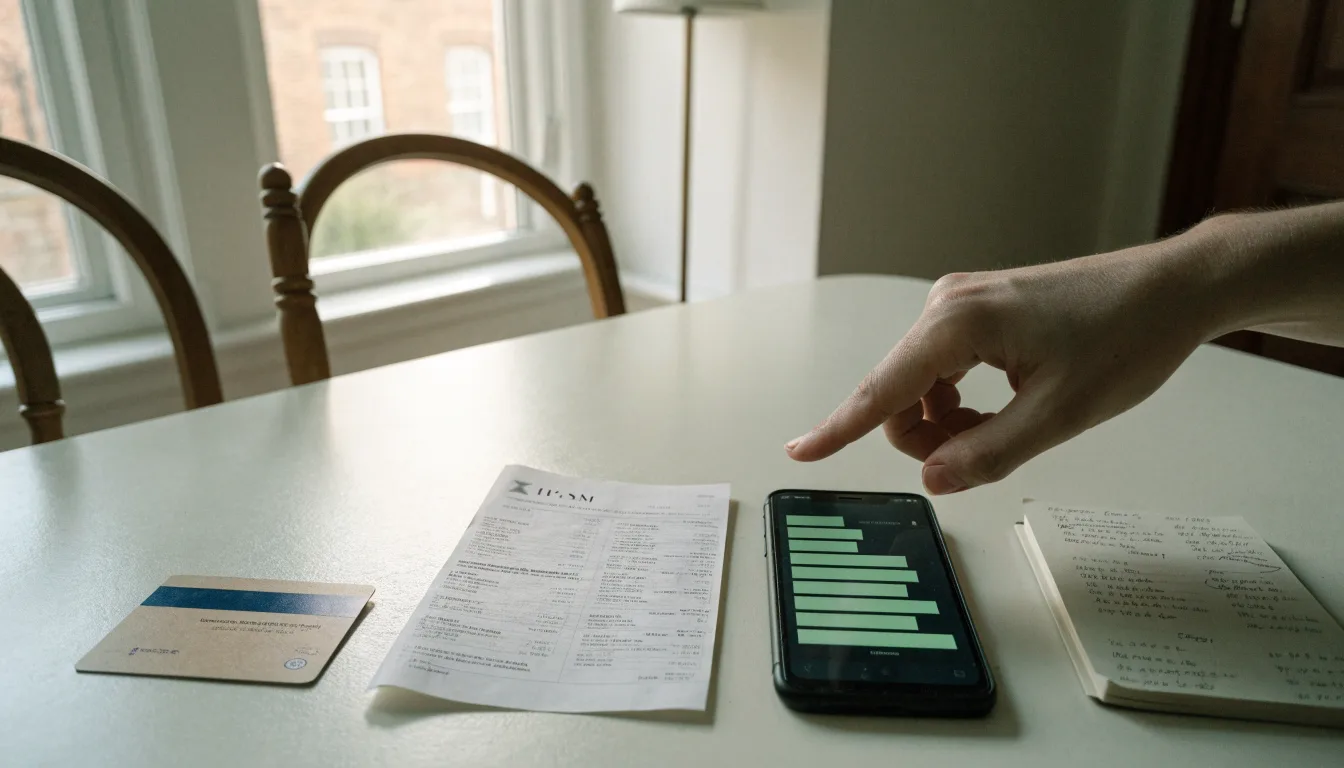
What the adjudicators decide, and how often they side with the player, is public. eCOGRA’s Great Britain report for 1 October 2024 to 30 September 2025 records 911 disputes received, of which 150 valid disputes were about deposits and withdrawals, an average domestic resolution time of 31 days, and 17.8 per cent of completed disputes ruled in favour of the consumer — 82.2 per cent for the operator. It also found that 361 of 499 invalid disputes, 72.3 per cent, had not been through the operator’s internal complaints procedure first. IBAS’s report for 2024-25 records 3,721 domestic disputes, 217 of them Banking/Financial, an average domestic completion time of 20 days, 65 consumer complaints upheld by written decision against 693 not upheld and 737 resolved by a consumer-satisfactory outcome before a ruling, and 100 per cent operator compliance with decisions in the consumer’s favour in both 2023-24 and 2024-25.
Those numbers are the point of the whole page. One in six disputes won may look unimpressive until you ask what the figure would be offshore, where the same clause sits behind a company the player cannot easily reach. The Commission itself is a regulator, not an ombudsman: it cannot resolve individual complaints or recover money, though it records every complaint and normally refers disputes to an independent third party. A British player who has gone through the process has, at worst, a decision and a published statistic. An offshore player has a term of service.
The Enforcement Picture Behind Those Offers
The Commission’s Illegal Markets team has been busy. Since April 2024 it has issued 3,140 cease and desist and disruption notices, comprising 2,032 cease and desist notices, 774 registrar referrals, 402 host referrals and three payment provider referrals, and it referred 447,778 Bing and Google URLs, securing 287,961 removals. In July to September 2026 alone it referred 1,835 websites and issued 546 cease and desist notices. Across 160 illegal gambling websites it measured an average 32 per cent fall in engagement after disruption, with registrar blocks producing 91 per cent and GEO IP blocking 60 per cent, against 30 per cent for Google removals — which is why the Commission says search-engine removal hides a site but does not block it.
The scale is smaller than the noise suggests. Commission analysis published on 5 November 2026 estimates that among people who had gambled online in the past four weeks, 2.5 per cent had engaged with an illegal gambling website, with a further 1.5 per cent in the past twelve months; across the whole population including non-gamblers, 94.4 per cent showed no indication of using one. Its dashboard recorded 586 illegal websites accessible to GB consumers in September 2026. The same market’s size depends on who is measuring: H2 Gambling Capital put stakes with illegal operators at £16.6 billion in 2025, while a Betting and Gaming Council-commissioned study by Frontier Economics estimated £2.7 billion staked annually online, with a further £1.6 billion possibly in person. Three very different numbers, and I would treat all of them as claims rather than findings.
Why Free Spins and the Identical Outside Offers Differ in Kind Only
The spins themselves are the least interesting part. A British casino’s free spins carry a ten-times cap, a ban on mixed-product offers, and an operator that has already checked who is playing. An offshore free spin carries whatever the terms say and a compliance department answering to a foreign regulator or none. None of that makes the British offer generous; it makes it bounded. Bounded is a feature.
One more layer, honestly stated. Where identity checks are the subject, the British standard is set by licence condition 17, which requires the operator to obtain and verify a customer’s identity before that customer is allowed to gamble, and by the money-laundering rules, which in a remote casino require identification and verification once deposits or withdrawals reach €2,000 — a threshold that catches linked transactions too. Offshore, the same check usually arrives later, at the withdrawal, when the balance is already theirs to hold. There is no accident in the sequence.
Help, Whatever the Licence Says
These organisations work the same way for anyone in Britain. The National Gambling Helpline, operated by GamCare, is free on 0808 8020 133 and open 24 hours a day, every day — by phone, live chat and WhatsApp. BeGambleAware, the public-facing brand of the charity GambleAware, directs people to the same number. GamFam, a registered charity set up by people affected by another person’s gambling, runs the GRA5P peer-support programme. Gamblers Anonymous England, Wales and Ulster answers on 0330 094 0322 with around 250 meeting locations. Gam-Anon UK & Ireland supports family and friends. The NHS National Gambling Clinic in London takes self-referrals, and NHS England has opened 15 specialist clinics across England since 2019, with integrated care boards commissioning eight more regional services receiving almost 5,000 referrals a year. Citizens Advice helps with the debt that tends to follow.
The funding behind much of this arrives by statute now: the gambling levy, which commenced on 6 April 2025, charges 1.1 per cent of previous-year Gross Gambling Yield for online operators and raised just under £120 million in its first year, ringfenced for research, prevention and treatment, split 50 per cent to treatment, 30 per cent to prevention and 20 per cent to research. Money collected from licensed operators, including, indirectly, from the ones whose bonuses are capped. It is not collected from the sites the bonuses on this page come from.
Finishing With the Free Spins Not on GamStop Question
The headline on an offshore free-spin offer is a number, and the terms behind it are a different business entirely — a wagering demand of 25× to 40× where the British ceiling is 10×, a cashout cap that can void the part of a win worth having, and an adjudicator who may simply be the operator’s own staff. The licence is the whole difference, because the licence is what installs the check before the deposit, the cap on the bonus, and the free route to a decision-maker. What tips the balance for me is the body of published outcomes: eCOGRA ruled for the consumer in 17.8 per cent of completed disputes in the year to 30 September 2025, IBAS upheld 65 written complaints across 3,721 domestic disputes in 2024-25, and both publish the figures. A market where the losing side is still published is a market where a complaint means something. Outside it, a free spin is a spin, and the argument over it belongs to whoever wrote the terms.
Bonuses and Free Spins
Content created by the «Wagerbaseuk.com» team