Casinos Without GamStop: Where a Complaint Can Go, and Who Decides It
 Available in US
Casinos without GamStop are operators holding no Gambling Commission licence, so the national self-exclusion scheme does not reach them. Nothing about them is a way round a GamStop exclusion, which holds for its full term and stays in place until the person asks GamStop to remove it. Below: the evidence, the delays, and who decides a dispute.

I have spent years reading the small print on casino sites, and the two things it never advertises are the ones that decide how a dispute ends: who licensed the site, and who is entitled to rule on it. A casino without GamStop can be perfectly open about its licence — several display a Curaçao certificate quite proudly — and still leave a British customer with nowhere useful to take a complaint. That is not an accident. It is the design.
The Gambling Commission is a regulator, not an ombudsman: it cannot resolve an individual complaint or retrieve anyone’s money. It handles disputes by sending them to an independent third party, and that third party is appointed under a licence condition that only holds for operators licensed in Great Britain. Strip the licence out and the whole apparatus disappears at once — the eight-week deadline, the free arbitration, the 100 per cent compliance record. What remains is a contract with a foreign company and the courts of wherever it is registered.
The scheme’s name is often typed “gamestop”, a slip worth noting because it is what operators search for when they look for the people to keep out.
The exclusion term itself is the plainest part of this. Registering blocks online gambling companies licensed in Great Britain for six months, a year, five years, or five years with auto-renewal, and it cannot be cancelled or deactivated during that period. It also does not lapse at the end of the chosen term: it stays in place until the person contacts GamStop to remove it. Anyone who wants support rather than a workaround can call the National Gambling Helpline on 0808 8020 133, free, 24 hours a day.
The Number That Sets the Benchmark
The benchmark here is the Commission’s own licence condition, and it is checkable in a way that no marketing claim on any site is. Since 31 March 2020 every online gambling operator has had to be part of GamStop as a condition of its licence. The requirement sits in the LCCP at social responsibility code provision 3.5.5, and the wording is not subtle: “Licensees must participate in the national multi-operator self-exclusion scheme.” In April 2020 the Commission added a second requirement — operators must check their entire customer base for registration at least every 24 hours — and in that same month two operators had their licences suspended under section 118(2) of the Gambling Act 2005 for missing the integration deadline. That is what the standard of comparison looks like when it is enforced.
On registration numbers, the register is now past half a million. At the end of 2025 there were 561,983 active exclusions, from 117,756 new registrations during the year; by July 2026 the figure was 614,738, of whom more than one in two had chosen the maximum five-year term. Among 2025 registrants, 29 per cent picked six months and 22 per cent picked auto-renewal. In the first half of 2026 registrations rose 16 per cent year on year, with May setting a monthly record of 12,236.
There is a telling detail in the 2025 annual report: the Group says it can no longer publish a lifetime registration total because the seven-year retention period from the scheme’s 2018 launch has begun to expire. Data ages out. Websites do not.
How British Sites Set the Standard
A British-licensed site inherits a set of obligations that a customer never has to negotiate for, because they are not offered as features — they are licence conditions. Withdrawals must not attract fresh information demands the operator could reasonably have made earlier (licence condition 17.1.1). Terms must be fair within the meaning of the Consumer Rights Act 2015 (7.1.1). Reverse withdrawals have been banned outright under RTS requirement 14B since 31 October 2021, so a withdrawal request cannot be turned back into a deposit. Wagering requirements on bonus funds are capped at ten times, since 19 January 2026. And a dispute that is not settled within eight weeks can go to an approved alternative dispute resolution provider free of charge.
The Commission’s data on how that works in practice covers June to September 2024: of 44.2 million withdrawals by customers of large online operators, 96.3 per cent cleared automatically. Withdrawal problems have nonetheless been the number one subject of consumer complaints to the Commission’s Contact Centre for years, with around 2,000 a year by July 2024, and the Commission has been blunt that operators must not introduce friction at withdrawal that they do not introduce at deposit, must not put commercial interests above customers’, and — where there are no regulatory concerns — have no valid reason to delay a payout at all.
That is the standard. The comparison is not flattering to what sits outside it.
Offshore, Compared Honestly — Including Terms That Build In Delay
Offshore operations are not a single category. Two of them do the paperwork properly, and their paperwork tells you exactly what you are and are not getting.
Curaçao. Since 24 December 2024 the Curaçao Gaming Authority has licensed directly, replacing the old master-licence and sub-licence model. Legacy “orange” certificates ended on 15 October 2025 and should not be treated as proof of a current licence; a historic /JAZ number proves nothing either. A B2C licence costs EUR 4,592 to apply for and EUR 47,450 a year, and the CGA issues a Certificate of Operation Seal only for an approved player-facing domain — clicking it must redirect to cert.cga.cw, and if the certificate behind the seal names a different domain, the site is displaying someone else’s paperwork. Curaçao sets no self-exclusion scheme that reaches British customers, and a CGA licence says nothing about a complainant’s remedies.
Anjouan. The regulator publishes a certificate verification framework with a unique licence number and a QR code linked to a public register, and requires licensees to segregate player funds, use certified random number generators, and appoint an approved ADR provider. That last point is the useful one: Anjouan currently approves EGIS ADR, Axion ADR, iGaming ADR and other approved providers. The fee schedule is EUR 17,828 for B2C issuance and the same for annual renewal. The reputational evidence is less tidy — an ABC News investigation published 31 December 2025 reported that Comoros financial intelligence officials described parts of the licensing operation as illegal, and that a former attorney-general called the selling entity “an illegal entity”. Anjouan Gaming’s own statement of 10 June 2026 concedes the point that matters: a licence “is not, and has never been presented as, a universal authorisation to operate in every country in the world”.
Kahnawà:ke. The longest-running of the three, regulating interactive gaming since 1999, with operators hosted at a data centre in the Mohawk Territory. Its Logo Certificate Program lets a player click through to a Certificate of Good Standing. It also has teeth in an unusual direction: a player who breaches a self-exclusion prohibition forfeits funds deposited or won to a charity chosen by the Commission. A CPA application fee rises from USD 35,000 to USD 40,000 on 1 January 2027.
Malta. Not offshore in the same sense — an EU regulator, with a EUR 5,000 application fee, a EUR 25,000 annual licence fee, gaming tax at 5 per cent of revenue, and minimum share capital of EUR 100,000 for Type 1 and 2 licences. The MGA keeps a published list of Unauthorised URLs and declares that any site on it referencing a Maltese licence is making a false claim.
Costa Rica. Worth naming because the phrase “licensed in Costa Rica” still appears on casino footers. Costa Rica has no comprehensive gambling licensing regime; the “data processing licence” sometimes cited is not a licence in the legal sense, and a bill that would have created a proper regime was rejected in early 2026.
Delays are built into the terms rather than the licence. Curaçao and Anjouan both permit maximum cashout clauses and bonus-abuse discretion that British rules prohibit; a complaint about a ₹400 maximum bet while wagering, or a bonus-amount-multiplied cashout ceiling, is a complaint about a term the regulator approved.
| Criterion | British licence | Curaçao (LOK) | Anjouan | Kahnawà:ke |
|---|---|---|---|---|
| Regulator | Gambling Commission | Curaçao Gaming Authority | Anjouan Gaming Authority | Kahnawà:ke Gaming Commission |
| Entry cost | Licence fee set by the Commission | EUR 4,592 application; EUR 47,450 a year | EUR 17,828 issuance and renewal | USD 35,000 CPA application |
| Scheme covering GB online players | Yes — since 31 March 2020 | No | No | No |
| Everyday licence check | Public register of licensed domains | cert.cga.cw via the Certificate of Operation Seal | Public register via QR on the certificate | Certificate of Good Standing via the logo |
| Stated cashout ceiling | Prohibited | Permitted | Permitted | Not set out as prohibited |
| ADR for a British complainant | Approved provider, free, after eight weeks | None specific to GB | EGIS, Axion, iGaming ADR and others | Dispute Resolution Officer |
| Withdrawal, in the Commission’s data | 96.3% cleared automatically (June–September 2024) | No equivalent published figure | No equivalent published figure | No equivalent published figure |
The Complaints Route This Topic Turns On
Here is the single mechanism that decides these cases, and almost nobody reads it before depositing.
The first time a dispute arises with a British-licensed operator, the route is fixed and free. The customer complains to the operator. Under LCCP provision 6.1.1 the operator must complete its own process, including internal escalation, within eight weeks, and if the outcome is unsatisfactory it must let the customer go to an approved ADR entity at no cost — the operator may issue a deadlock letter confirming the case can go straight there. ADR providers may consider account management and access to funds, including compensation for inconvenience. IBAS and eCOGRA have historically handled most gambling disputes; eCOGRA recorded 911 disputes in the year to 30 September 2025, of which 150 valid ones concerned deposits and withdrawals, resolved in an average of 31 days.
Later, and this is where the two worlds part, that route only exists because the licence exists. There is no statutory right to arbitration against an unlicensed operator, and no regulator obliged to make it happen. The Commission’s remit covers only businesses trading or advertising to customers in Great Britain that hold a Commission licence; it cannot resolve an individual complaint or get money back, and typically refers disputes to an independent third party that has no jurisdiction over an unlicensed site. Khanawà:ke runs a full-time Dispute Resolution Officer and Anjouan requires an approved ADR provider — but neither is a British ombudsman, neither works to the eight-week clock, and neither will be reached by a customer who has not first read which provider the operator actually names in its terms.
The warning signs of a broken route are consistent. Terms that name no ADR provider at all, or name an email address with no scheme behind it. Terms that give the operator sole discretion — “we may, at our own discretion, close accounts or forfeit winnings” — the kind of clause that produced a £170,000 penalty in July 2025 and featured in a £900,000 settlement in October 2026. A site whose licence certificate, when clicked, shows a different domain. And a support function that answers questions about deposits in minutes and questions about withdrawals in days. That last one is not a coincidence; it is a business model with a complaints procedure bolted on.
Five Signs an Offshore Operator Can Be Trusted
Trust here is not a feeling. It is a set of documents anyone can check in ten minutes.
A licence that verifies, on the domain being used
Click the seal. A Curaçao Certificate of Operation must redirect to cert.cga.cw, and the certificate must name the same domain as the site being viewed — the CGA states plainly that a certificate showing a different domain belongs to another operator and the site should be treated as unauthorised. Anjouan certificates carry a unique licence number and a QR code linked to a public register; a certificate that will not resolve there should not be relied on. Kahnawà:ke’s logo generates a Certificate of Good Standing. If there is no clickable seal, there is no check to make, and that is the answer.
A named ADR provider in the terms
Search the operator’s terms for the words “dispute”, “ADR” or “arbitration”. A trustworthy offshore operation names a scheme and its contact details, because Anjouan requires exactly that and its approved providers are public. A route that says disputes are “subject to the exclusive jurisdiction” of a distant court, and names nothing else, has told you what a complaint is worth.
Bonus terms without a discretionary trapdoor
Look for the two numbers that decide whether a bonus is a gift or a leash: the wagering multiplier and the maximum cashout. A 35x multiplier on a small bonus with a cashout ceiling can leave a player with nothing after a win, and offshore terms commonly run at 25x to 50x with no cap at all on the multiplier — but the ceiling matters more than the multiplier. Terms that reserve the right to void winnings “at our discretion”, rather than listing prohibited patterns of play, are unenforceable in Britain and routine offshore.
A cashier that refuses friction in only one direction
Timing is evidence. A site that wants deposits fast and withdrawals slow has told you where its interests lie. Check whether the identified payment methods are the same ones it pays out to, and whether the terms price the withdrawal or limit how many can be requested at once. A clause allowing only one withdrawal at a time until the previous one is authorised is the sort of term the Commission has already found unfair under the Consumer Rights Act 2015.
Published player-protection tools that are not decorative
A serious operation lets a customer set limits including zero, states where customer funds are held and whether they are protected on insolvency, and says what happens to a balance after prolonged inactivity. British rules require a clear insolvency rating; offshore rules do not. An operator that answers those questions unprompted is telling you it expects to be read.
How to Check an Operator Before You Deposit
Six steps, each with the reason it earns its place. All of them are ordinary checks anyone can do from a kitchen table.

- Verify the licence on the live domain. Click the seal and confirm it resolves to the regulator’s own verification page and names the domain in the address bar. Not the domain in the footer text — the one being used.
- Search the public register for the domain. The Gambling Commission advises checking that a business holds a British licence and clicking through to the public register to see whether the site’s activities and domain names match. If they do not match, the licence is decoration.
- Read the dispute clause before the bonus clause. Find out who decides a complaint and whether the provider is named. A route with no provider is a route that ends in an unanswered email.
- Do the bonus arithmetic on a real withdrawal. Multiply the bonus by the wagering requirement, apply the game-weighting chart, then apply the maximum cashout. Ignition, for instance, weights slots at 100 per cent but roulette and baccarat at 5 per cent and live dealer games at 0 per cent. If the sum ends in a ceiling, the offer is a demo, not a gift.
- Check the payment method both ways, and the fees at both ends. A withdrawal through an e-wallet can lose 2.80 per cent on the way out, and Skrill charges a minimum of EUR 3.50; a bank-transfer route can be free and slower. Match the method to the sum.
- Write down the clock and the help line. Note when a withdrawal was requested and what the terms promise. If nothing arrives, the Commission’s route applies only to licensed operators — and the National Gambling Helpline on 0808 8020 133 is free, 24 hours a day, for anyone who needs support rather than a fight.
What the Withdrawal Numbers Actually Say
Numbers are where the marketing falls apart, so it is worth reading them carefully.
British-licensed operators are fast in aggregate. Of the 44.2 million withdrawals recorded between June and September 2024, 96.3 per cent cleared automatically and 3.5 per cent within 24 hours — the delay, where it happens, is concentrated rather than typical. Yet only 49 per cent of people who had gambled in the previous 12 months agreed, in research published in July 2026, that it is quick and easy to withdraw winnings; 18 per cent disagreed. Aggregate speed and individual experience are not the same statistic.
Complaints about withdrawals have drifted down in volume but stayed top of the list: coded complaints to the Commission’s Contact Centre fell from 2,416 in the year to December 2022 to 1,791 in the year to December 2025, and the Commission’s 2024-25 annual report still names withdrawals as the cause of most complaints it receives. More than a quarter of complaints now concern identity verification — a document request that arrives only when a withdrawal is attempted, which is precisely what licence condition 17.1.1 exists to prevent. The Commission has also flagged concern about operators using “fuzzy matching” to onboard customers on partial verification, noting that a middle name used instead of a forename can create a mismatch against GamStop records and undermine the exclusion altogether.
On the unlicensed side, the enforcement picture is busy and its limits are instructive. Since April 2024 the Commission’s Illegal Markets team has issued 3,140 cease and desist and disruption notices, referred 447,778 search engine URLs and secured 287,961 removals, with an average 32 per cent fall in engagement across 160 illegal sites measured. It reports registrar blocks and website suspensions cutting engagement by 91 per cent each, ahead of search-engine removal at 30 per cent, because removal from a search engine makes a site harder to find without stopping access to it. In July to September 2026 alone it referred 1,835 websites and issued 546 cease and desist notices. Across April 2025 to March 2026, prosecutions commenced in the quarter totalled 0 or 1 each time. Enforcement disrupts. It does not reimburse.
What a Dispute Looks Like When It Goes Wrong
Picture the ordinary case. A player wins, requests a withdrawal, and is asked — for the first time — for a passport photograph and a utility bill. Nothing in the terms said so at deposit. If the site holds a British licence, that request is a probable breach of licence condition 17.1.1 unless anti-money-laundering rules required it at that moment, ADR providers will look at it free of charge, and the operator’s terms cannot confiscate the balance for a failure to produce documents. The Competition and Markets Authority’s undertakings, agreed with six operators between 2016 and 2019, say customers are entitled to their deposits, winnings from money deposited and gambled, and bonus winnings where the conditions are met.
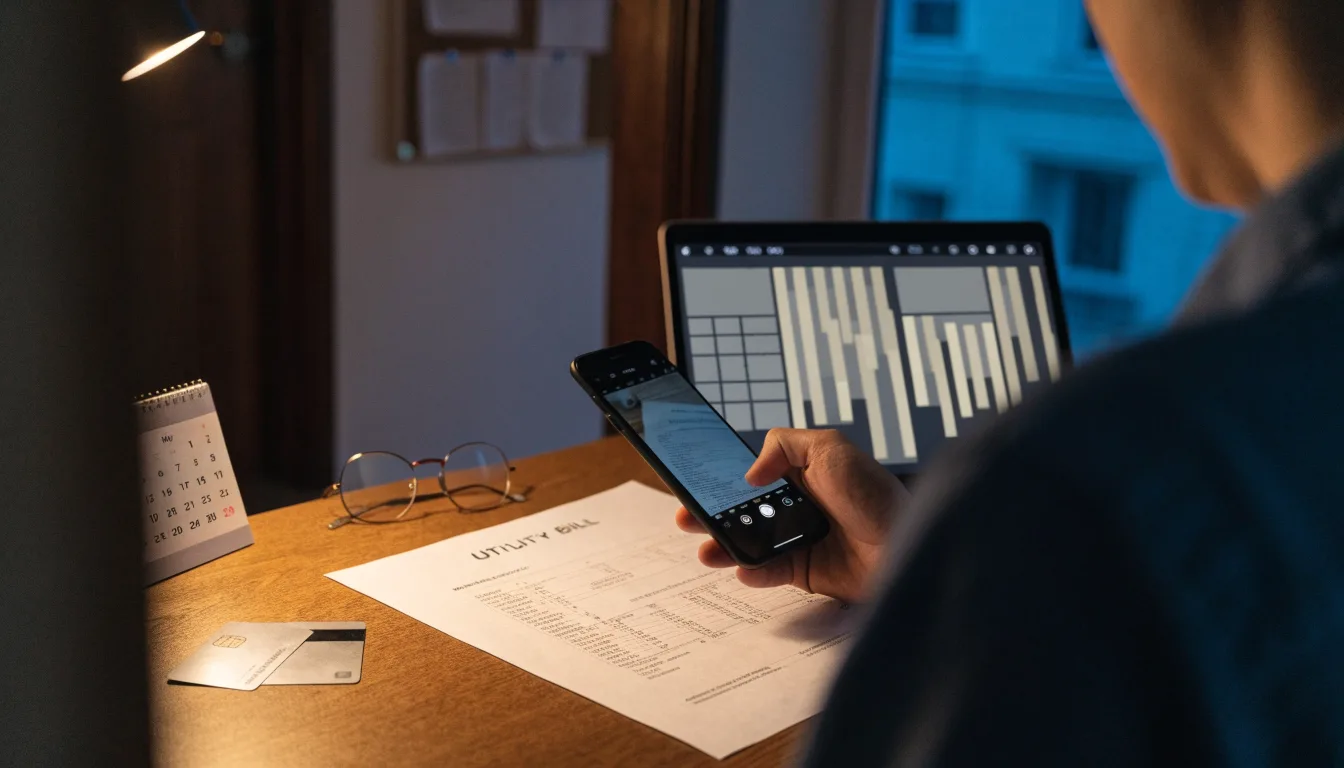
If the site holds no British licence, the same request is simply a term of a contract, and the answers run out: no ADR appointment, no eight-week deadline, no public body that will take the file. There is no fixed number of days in which a British operator must complete a withdrawal either — the regime relies on fair and open terms rather than a stated deadline — but there is someone standing behind the fair-term rule. Offshore, there is no one, unless the operator has named an ADR provider of its own accord.
Two facts deserve to be written on the wall. The first: the Commission issued a warning notice on 20 January 2025 about casino games supplied by licensed operators appearing on unlicensed sites, noting that such sites often target customers who have excluded via GamStop and may have inadequate social responsibility and anti-money-laundering controls. The second: a self-exclusion registered with GamStop holds for its full term and then stays in place until the person contacts GamStop to remove it. No offshore casino is a route round it, and any site suggesting otherwise is telling you what it thinks of its customers.
Questions About Casinos Without GamStop
Can an offshore casino ignore a GamStop exclusion?
Yes, and that is the whole of it. GamStop’s obligations apply to operators licensed in Great Britain, and the Commission’s warning notice of 20 January 2025 noted that unlicensed sites often target excluded customers. The exclusion registered with GamStop holds for its full term and remains until the person asks GamStop to remove it. Depositing offshore does not change the registration, and it does not create a new complaint route.
What happens to my complaint if the operator has no British licence?
It becomes a contract dispute. The Commission is a regulator rather than an ombudsman and cannot resolve individual complaints; its remit covers businesses trading or advertising to customers in Great Britain that hold a Commission licence. Some offshore regulators require an approved ADR provider — Anjouan approves EGIS, Axion, iGaming ADR and other approved providers, and Kahnawà:ke employs a Dispute Resolution Officer — but none of those is bound by the eight-week deadline and free referral that a British licence imposes.
Which payment methods are worth checking for a withdrawal?
Check the one you intend to use both ways. Bank transfers through an e-wallet typically cost a percentage with a minimum — Skrill charges 2.80 per cent with a minimum of EUR 3.50 — while a British licensed operator cannot limit the amount anyone withdraws from their deposit balance, and cannot charge more than the direct cost of processing. Faster Payments moves most payments in seconds, but the £1 million scheme ceiling is not an entitlement: individual banks set lower limits.
How quickly should a British-licensed withdrawal clear?
In the Commission’s own data for June to September 2024, 96.3 per cent of 44.2 million withdrawals by customers of large online operators cleared automatically and 3.5 per cent within 24 hours. There is no fixed maximum number of days in the LCCP; the regime relies on fair terms, the identity-verification condition and the ban on reverse withdrawals rather than a payout deadline. Offshore, no comparable figure is published by anyone.
Are live dealer games treated the same as slots for wagering?
No, and the difference is large. Offshore weighting charts routinely count slots at 100 per cent towards a wagering requirement while pricing roulette and baccarat at 5 per cent and live dealer games at 0 per cent, which can leave a bonus unplayable in practice without ever being declined. In Britain, wagering requirements on bonus funds are capped at ten times since 19 January 2026, and wagering cannot be applied to play with a deposit balance.
Where should a British complaint about an unlicensed site go?
There is no regulator that will decide it. Since April 2024 the Commission’s Illegal Markets team has issued 3,140 cease and desist and disruption notices and secured 287,961 search engine removals, but disruption is not restitution, and prosecutions commenced were 0 or 1 a quarter across April 2025 to March 2026. A disputed sum is best pursued through the operator’s named ADR provider if one exists, and through the courts if it does not.
The Short Version
Casinos without GamStop are legal businesses abroad and unlicensed businesses here, and the practical consequence is not the games or the odds — it is that the one mechanism built to settle a British dispute simply is not attached to them, so a complaint that would cost nothing and take eight weeks under a Commission licence becomes a letter to a foreign company and, if it matters enough, a hearing somewhere else. Anyone who wants the protections rather than the workaround can start with the Nottingham-based scheme itself, and anyone who wants support rather than a route round a block can call the National Gambling Helpline on 0808 8020 133, free, 24 hours a day. The register stood at 614,738 people in July 2026, more than one in two of them on the full five-year term — the evidence that a route round it is the last thing most of them are looking for.
Casinos Not on GamStop
Content created by the «Wagerbaseuk.com» team